
Beyond the Grid: The Influence of Japanese Aesthetics on Modern Graphic Design
By Akiko Nakamura. Book design: Hiroshi Tanaka, Tokyo. English edition, Naoko Press, 2025, €45, ¥7200, £49. Reviewed by Julian Merle
The Minimalist aesthetic that dominates contemporary branding, user interfaces, and editorial design seems inherently modern. It is celebrated for its clarity, calm, and focus—qualities that have come to define “good design.” To many, its origin lies in the clean logic of the Bauhaus or the structured rigor of Swiss Style. But, as Julian Merle writes, a new book by Akiko Nakamura invites us to look East: toward Japan, and a visual philosophy centuries older than Helvetica.
“Design is not what is added, but what is removed,” Nakamura quotes from the Zen calligrapher Kazuaki Tanahashi, and that quote might well summarize the essence of her book, Tracing the Invisible Line: Japanese Aesthetics in Modern Graphic Design. Published originally in Japanese in 2021 and now newly available in English, the book is not a history, nor a treatise—it is a quiet, careful meditation on visual culture.
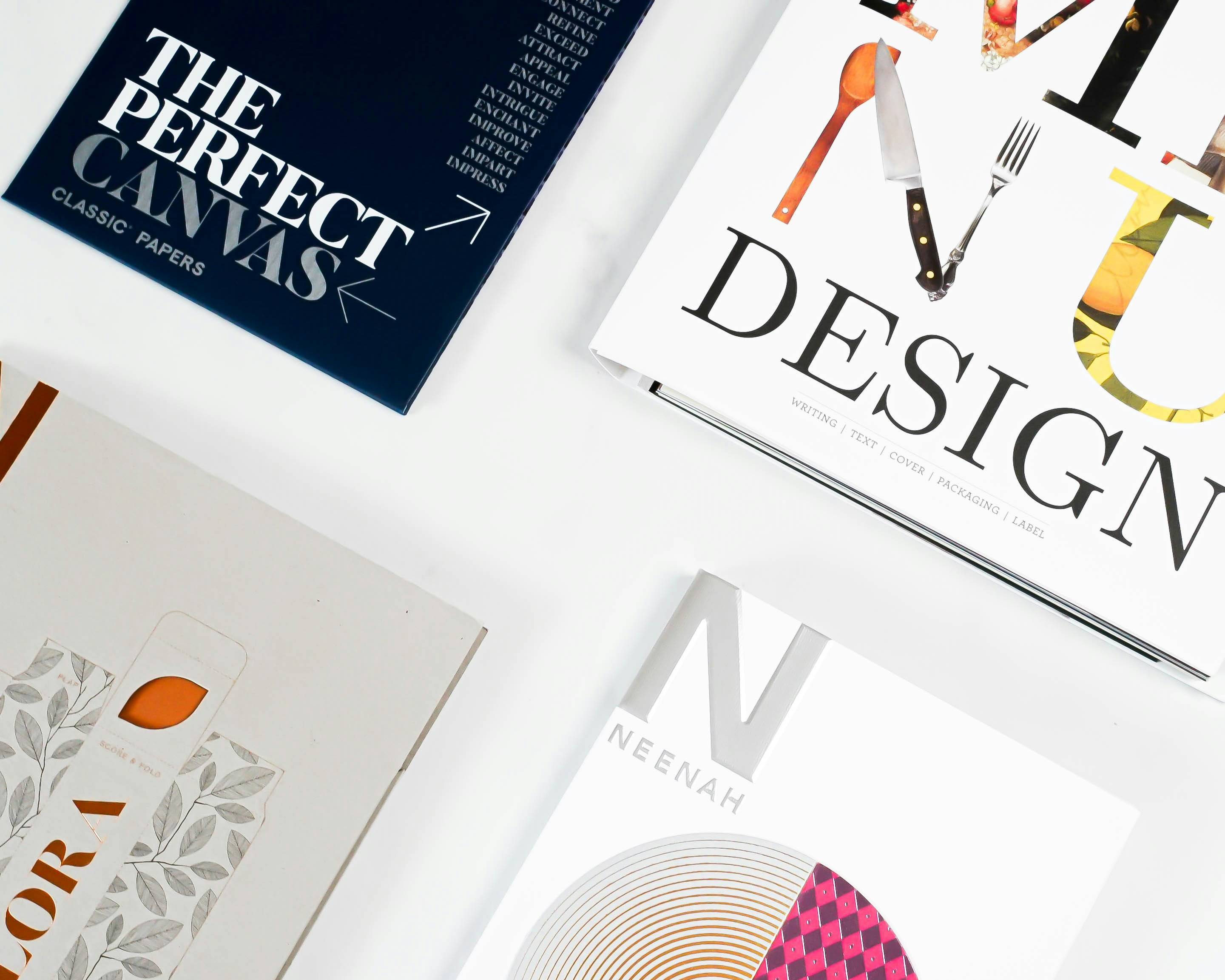
The book’s structure itself reflects its subject: short, well-spaced chapters, generous white margins, and a typography layout that feels more like a haiku than a textbook. It is design as philosophy in action.
The Space Between Things
Nakamura begins by examining “ma”—the Japanese concept often translated as “negative space” but more accurately described as the pause that allows presence to be felt. In traditional Japanese arts—ikebana, noh theatre, garden design—what is not present is as meaningful as what is. Nakamura argues that this principle subtly entered Western graphic design through post-war exchanges and the admiration of Japanese printmaking by European modernists.
In a particularly compelling chapter, she dissects the 1960s brand identity work of Japanese designer Yusaku Kamekura (whose designs for the Tokyo 1964 Olympics are still studied in design schools worldwide), showing how Kamekura’s use of contrast, quiet color, and symbolic reduction prefigures later Western trends in corporate identity.
A Design Without Ego
Where Swiss Style champions objectivity, Nakamura presents Japanese design as championing selflessness. This is not the same. Swiss grids are tools for organizing information efficiently, architecturally. Japanese minimalism seeks harmony—between form and emptiness, between content and silence. Designers like Kenya Hara (MUJI’s long-time art director) and Naoto Fukasawa (famed for his “Without Thought” philosophy) are shown to embody this mindset: design as a respectful cohabitation with the world, not a way to control it.

One section pairs side-by-side a Müller-Brockmann poster and a traditional Japanese ink wash painting. The comparison is startling: both feature asymmetry, focus, restraint. But one seeks to order the world; the other to flow with it. Both are minimal. But their intent is profoundly different.
Minimalism as Global Language
What emerges from Nakamura’s book is not a hierarchy of influence, but a suggestion that modern graphic design is a polyglot language, formed as much from Kyoto as it is from Zurich or Weimar. She tracks how Japanese ideas about impermanence (wabi-sabi), imperfection, and subtlety have influenced Western minimalist branding—especially in the luxury and tech sectors. Apple’s product photography, Aesop’s stores, even the blank elegance of many wellness brands bear the fingerprint of an Eastern way of seeing.

The Future: Empathy Over Efficiency
In her final chapter, Nakamura critiques what she calls “algorithmic minimalism”—the hollowed-out aesthetic driven by templates, trends, and digital platforms. She calls instead for empathetic minimalism: one that, like Japanese tradition, is rooted in attentiveness, craftsmanship, and human rhythm.
“Design is not less for the sake of less,” she writes. “It is less so that more can be felt.”
Like Hofmann’s tracing of Swiss educational rigor, Nakamura’s book reveals the depth beneath a surface style we too often take for granted. What looks like simplicity is often backed by centuries of reflection. What seems modern may, in truth, be ancient.